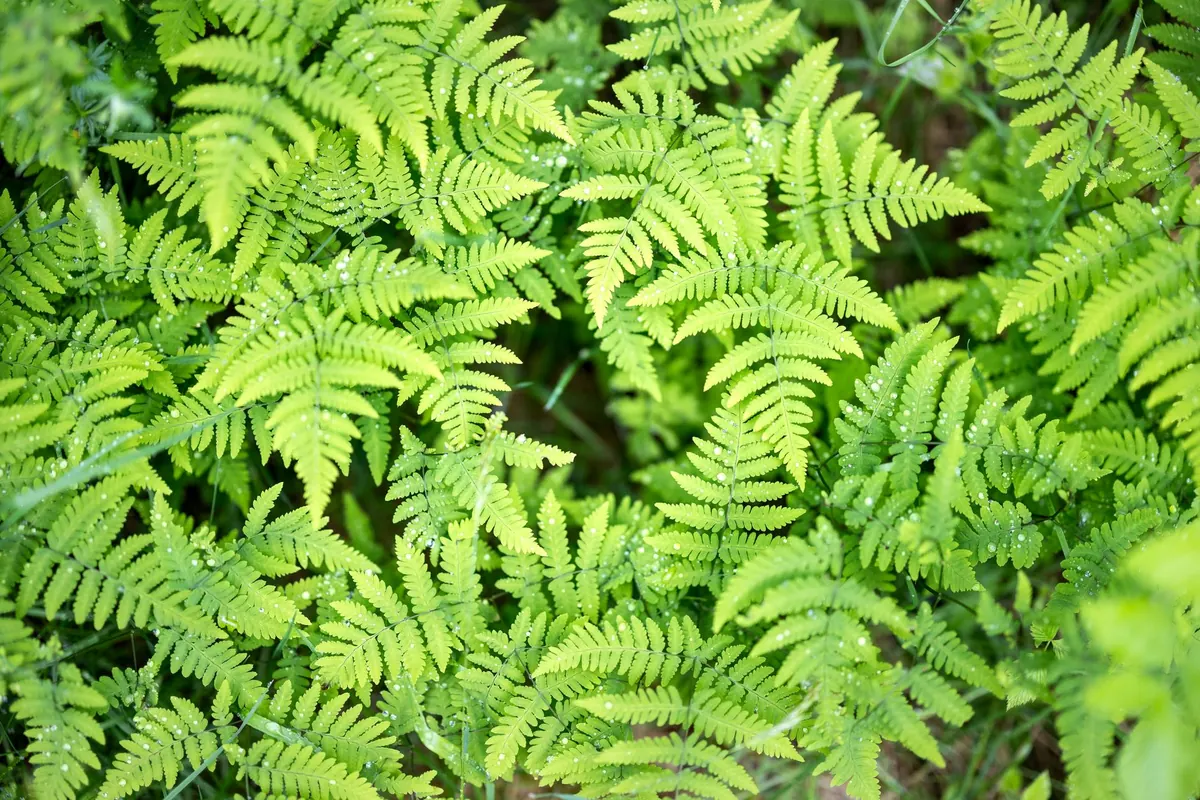
Ferns rarely die of thirst in a British home. More often they drown — watered faithfully every Sunday, sitting in compost that has not dried out since October, quietly losing roots to rot while the fronds above look innocent. The trick is not to memorise a schedule but to work out how fast your fern dries out, and that depends on which room it lives in.
"Water regularly" tells you nothing useful. Push a finger into the compost up to the second knuckle. If it feels cool and damp, walk away. If it is dry at that depth but the pot still feels heavy, wait a day. If it is dry and the pot lifts easily, water.
Learn the weight of the pot instead. Lift it just after watering, then lift it three days later. That difference in heft is the most reliable moisture gauge you will own. The cheap probes sold for houseplants often read "wet" in peat-free mixes long after the roots have dried out, so trust your hands.
Before you settle on a frequency, look at where the plant actually sits.
In most British homes, two of these work against you at once from October onwards: the heating dries the air while winter light is too weak for the fern to use much water. That combination is why more ferns collapse in January than in June.
A bright living room with a south or west window can dry a 15cm pot in four to six days in summer. Move the same fern two metres back from the glass and it may take ten. Hallways are the danger zone: little natural light, cold air from the front door, and a plant nobody remembers. If a fern has to live there, choose something forgiving such as a Boston fern or a holly fern, and water roughly every ten to fourteen days — always after checking the compost, never because it is Sunday.
Bathrooms are the easiest place in the house to grow ferns. Shower steam supplies humidity for free and a frosted window usually gives enough light, so you can let the compost dry further between waterings without the fronds crisping. Kitchens are brighter and warmer; a fern on a windowsill there may need water twice a week in summer. Keep it away from the hob, where steam, splashes and heat do more harm than good.
Cooler and often north-facing, bedrooms suit ferns that dislike heat. Water every seven to ten days in the growing season, and stretch that considerably if the radiator is off and the door is shut. Bedrooms get forgotten, which is usually fine — a fern that dries out slightly is far easier to rescue than one sitting wet for a fortnight.
A south-facing sill behind double glazing can reach punishing temperatures in a July heatwave and behaves like a radiator in winter. Water often but sparingly, and check daily in hot spells. Conservatories swing further still: a fern there may want water every two or three days in June and almost none in December. Cold draughts from single-glazed porches cause a different problem — chilly, wet roots that rot rather than grow.
You are not keeping one routine, you are keeping two. From roughly April to September, light rises, ferns push out new croziers and water demand climbs. From October, growth slows, days shorten and the heating comes on. Reduce watering before the plant asks you to.
A fern that needed water twice a week in July might want it once a fortnight in December, and once a month in an unheated spare room. If you are going away for a week in summer, group your ferns together on a tray of damp gravel — not standing in water — and move them out of direct sun. In winter, most ferns will happily go ten days without you.
Act quickly and most ferns recover. Tip the pot on its side, slide the rootball out and look at the roots: firm and pale is good, brown and mushy is not. Trim the mushy roots with clean scissors, shake off the old compost and repot into fresh, free-draining mix in a clean pot with drainage holes. Water once, then leave it alone until the top few centimetres dry. Keep it somewhere bright but out of direct sun, hold off feeding for a month or two, and expect to lose some fronds — new croziers usually appear from the base within a few weeks.
Once a week, pick up each fern. Heavy pot, damp compost: nothing to do. Light pot, dry at knuckle depth: water thoroughly in the morning, let it drain, empty the saucer. Once a month, look at the light and the radiator rather than the plant — a fern that has been moved, or a radiator that has been switched on, changes everything. Write the date on a scrap of paper or note it on your phone for the first month or two; after that you will know your ferns by weight, and the watering can will stop being the thing that kills them.
Photo: Marek Piwnicki / Pexels

Compact ferns for pots and narrow, shady courtyards, chosen for spring, summer, autumn and winter interest, with...

Eight planting combinations that carry a damp, shady UK border through the year, pairing ferns with hellebores,...

A step-by-step guide to collecting, sowing and raising ferns from spores in the UK, from the first green film to...


Your guide to growing and identifying ferns.
