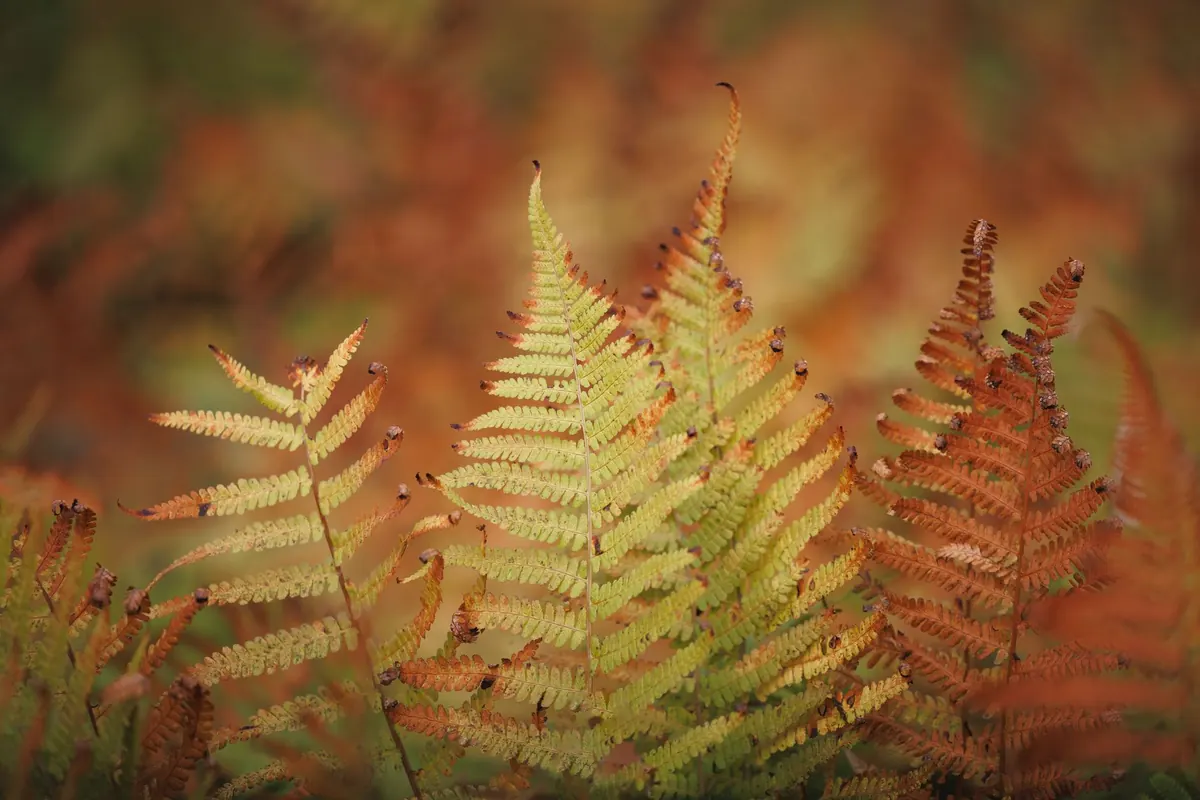
Autumn is the quiet hinge of the fern year. The flush of new croziers is long gone, the fronds have darkened and thickened, and the garden is finally slowing down. What you do over the next few weeks decides how your ferns look next spring — and none of it is dramatic work. It is tidying, mulching, and a bit of forward planning while the weather is still on your side.
Work through these jobs roughly in order of urgency, from the first fall of leaves to the night you carry the last pot indoors.
A mat of wet leaves sitting in the crown of a fern is one of the few things that genuinely kills them. It holds moisture against the growing point, blocks air, and gives slugs somewhere to spend the winter. Each time you rake the borders, lift leaves out of the crowns by hand rather than blasting them with a leaf blower, which tends to drive debris deeper into the plant.
Resist the urge to cut everything back in one satisfying afternoon. Green fronds are still working, and on evergreens they are also shelter for the crown beneath them.
A mulch of composted bark, leaf mould or well-rotted garden compost does two things in autumn: it insulates the roots through repeated freezes and thaws, and it feeds the soil slowly as it breaks down. Aim for a layer 5–7 cm deep over the root zone, tapering to nothing at the crown.
This matters most for ferns planted this year, ferns in free-draining or sandy soil, and anything in an exposed or wind-scoured spot. Push the mulch outwards with your fingers so the crown sits in a shallow dimple of bare soil. Bury a crown under damp organic matter and you have created ideal conditions for rot.
If your soil is heavy clay and already wet, use less. A thin scattering of leaf mould is better than a thick blanket that never dries out.
Compost in a container freezes far harder than garden soil, and the roots inside cannot escape it. Tender and borderline ferns should be under cover well before the first proper frost in your area, ideally while the days are still mild so they adjust gradually rather than going straight from a warm garden into a cold porch.
For everything else in pots, think about position, insulation and drainage:
Tree ferns are a special case. Their crowns need protection, not their trunks. A generous handful of dry straw or bracken packed into the crown, held in place with fleece or a loose net, keeps the growing point dry through the worst of it. Remove it in spring once hard frosts have passed.
Growth has stopped, so most ferns need very little water now — but "very little" is not none. Pots under a conservatory roof, or in the rain shadow of a wall, can dry out completely through winter and you will not notice until the fronds crisp in February.
Water sparingly, in the morning, so any splashes on the foliage dry before the cold night. Stop feeding altogether. Fertiliser now encourages soft new growth that the first hard frost will shred, and the plant does not need it while it is resting.
Indoor and conservatory ferns face a different autumn. Light levels drop, heating comes on, and the air turns dry and still. Clean the leaves with a soft brush or a lukewarm shower to remove dust, then let them drain properly before returning them to their spot. Turn off any misting routine that leaves water sitting in the crown for hours in cool conditions.
Check the undersides of fronds and the rims of pots for scale insect and mealybug while you are handling them. Both settle in quietly over winter and are far easier to deal with now.
Autumn is your last easy chance to catch problems. Slide pots out of their covers and look for vine weevil grubs in the compost — white, grub-like, and fond of fern roots. Look under the crown for slug eggs, small clusters of clear jelly. Scrub saucers, clear weeds from around the base, and make sure nothing is sitting in standing water.
Before you forget, write down which ferns came through well and which spots turned out to be frost pockets. A few photographs now are worth more than memory in April. If you lost something, note why — a pot left on paving, a crown buried in mulch — and order replacements for spring planting rather than autumn, when bare-root ferns settle far more easily.
Clear the leaves, mulch with a gap at the crown, cut only what has actually died, move the pots and stop feeding. That is the whole checklist, and it will take an afternoon or two at most. After that, the best thing you can do for a fern in autumn is very little: let it sit through the cold, check the pots now and then, and wait for those first tight croziers to uncurl in spring.
Photo: Serhii Barkanov / Pexels

Compact ferns for pots and narrow, shady courtyards, chosen for spring, summer, autumn and winter interest, with...
Eight planting combinations that carry a damp, shady UK border through the year, pairing ferns with hellebores,...

A step-by-step guide to collecting, sowing and raising ferns from spores in the UK, from the first green film to...


Your guide to growing and identifying ferns.
