
Most ferns sold in Britain are tougher than gardeners expect. The trick is telling apart the ones that shrug off a hard frost from those that merely survive it, looking ragged until midsummer. All ten below will come through a typical British winter in the ground, and most cope with frozen soil and a sharp east wind. Give them the right spot and they return bigger each spring. The difference between a fern that thrives and one that merely clings on often comes down to soil, shelter, and the age of the plant. A well-established crown has reserves to draw on; a newly planted one is vulnerable. So if you are planting this autumn, pay as much attention to the ground as to the label.
A plant labelled hardy is not always evergreen, and it is not always tidy. Hardiness works on two levels: the crown and roots must survive the cold, while the fronds may or may not. Dryopteris filix-mas dies back to a brown crown and regrows in April. Polystichum setiferum holds green fronds all winter and still looks presentable in January. Both are hardy; they simply fail differently. The key is to know which you are buying, so you can plan for a gap or a mess.
Wet cold does more damage than dry cold. A fern sitting in waterlogged clay through a January thaw will rot faster than one in free-draining soil at the same temperature. Wind matters too, because evergreen fronds can be scorched by cold, drying gusts even when the thermometer stays above freezing. Shelter from the east is worth more than an extra layer of mulch. If your garden is exposed, consider planting a windbreak of evergreen shrubs, or use a temporary weave fence around tender crowns.
Container ferns are a separate case. Roots in a pot freeze from every side, so a fern that sails through winter in the ground may not survive in terracotta on a patio. Move pots against a house wall, wrap them in hessian or bubble wrap, and stand them on feet so water drains away. Even then, a hard freeze can kill a potted fern that would be perfectly safe in the border. If in doubt, plunge the pot into a spare patch of soil for winter.
Tip: A simple test of hardiness is to look at the crown. If it sits at or just below soil level, it has natural protection. If it forms a trunk or sits above the ground, it will need extra care.
Native to British hedgerows and woods, which tells you plenty. Deciduous, unfussy about soil, and surprisingly tolerant of dry shade once established. Plant it where you want dependable green from May to October with almost no input. It is also one of the best ferns for a difficult north-facing border, and it will self-sow gently in damp corners.
Similar in outline to the male fern, with golden scales on the stems and a semi-evergreen habit that holds up well in mild winters. 'Cristata' has crested frond tips. Happier than most in dry shade under trees. The old fronds can be cut back in early spring to make way for the new croziers.
New fronds unfurl copper-pink in spring before ageing to deep green. Evergreen in all but the hardest winters, and useful in a woodland border or a shaded pot. It likes humus-rich soil and moisture, but resents standing water. In a cold snap, the fronds may blacken, but the crown survives and new growth appears in spring.
Dramatic, with black stems and stiff fronds up to a metre. Reliably hardy in the ground, but site it out of strong wind because the fronds are brittle. Superb against dark foliage. It looks especially good with purple heuchera or dark-leaved elder.
The best evergreen fern for most British gardens. Finely divided fronds, dense shuttlecock shape, and colour held right through winter. 'Herrenhausen' and 'Dahlem' are strong growers. Cut tired old fronds back in late February, before the new croziers appear. It tolerates a wide range of soils, from sand to clay, as long as drainage is reasonable.
Stiffer and glossier than its soft cousin, with leathery fronds that stand up to wind and cold. Slower to establish and longer lived. Excellent in a north-facing border or against a shady wall. It is one of the few ferns that looks good in deep, dry shade, though it grows larger with some moisture.
From the damp forests of western North America and thoroughly at home in British shade. Long dark green fronds to a metre, evergreen, and tolerant of dry shade beneath mature trees once settled. Give it room. It makes a strong architectural statement when planted in a mass, and the fronds can be used in winter flower arrangements.
The croziers are covered in golden hairs and fold backwards as they open, which gives the fern its name. Glossy evergreen fronds, neat habit, about 60cm. It dislikes drying wind, so plant it in shelter. A good choice for a small courtyard or a shaded patio pot that is moved under cover in winter.
Native and neat, producing flat dark evergreen fronds plus upright fertile ones in summer. It needs moist, acid to neutral soil, and is ideal for a shady border or woodland edge. Unlike many ferns, it tolerates poor, peaty soils, but it will not sit in dry shade. The evergreen fronds lie flat to the ground, while the fertile fronds stand upright like combs. Cut out old fertile fronds in autumn if you want a tidier look.
Distinctive strappy, undivided fronds that stay green all winter. Native to Britain, often found on shady walls and in woodland. It prefers moist, lime-rich soil and deep shade, but tolerates drier conditions than most. 'Cristatum' has crested tips, and 'Angustatum' is narrow and wavy. It is superb in a pot, a shady border, or a north-facing wall crevice. It is very cold-hardy, and its leathery fronds shrug off frost and wind.
Getting ferns through winter is mostly about what you do in autumn. The goal is to send them into the cold with a healthy crown, good drainage, and a little shelter. Follow these steps for the best results.
Not everyone has a border, and many ferns do well in pots. The key is to choose tough species and protect the roots from freezing. Polystichum polyblepharum, Asplenium scolopendrium, and Dryopteris erythrosora are all good choices. Use a soil-based compost rather than a light multipurpose mix, as it holds moisture and nutrients better. Stand pots on feet to prevent waterlogging, and wrap them in hessian or bubble wrap when severe frost is forecast. In mild areas, you may get away with leaving them out, but in colder gardens, move them to a cold frame or unheated greenhouse.
Ferns look superb with other shade-lovers that offer winter interest. Plant them with hellebores, whose flowers nod above the fronds in January and February. Snowdrops and winter aconites will carpet the ground beneath deciduous ferns. For evergreen structure, add Epimedium, Pachysandra, or Liriope. In a damp border, Astilbe and Rodgersia provide bold foliage in summer and seedheads in winter. The contrast of fern fronds with the flat leaves of Asarum or the silver markings of Pulmonaria is a classic woodland combination.
With the right choices, your fern border can look good for twelve months of the year, not just in summer. Hardy ferns are among the most reliable and long-lived plants for British gardens, and they ask for very little once established. Give them a good start, and they will reward you for decades.
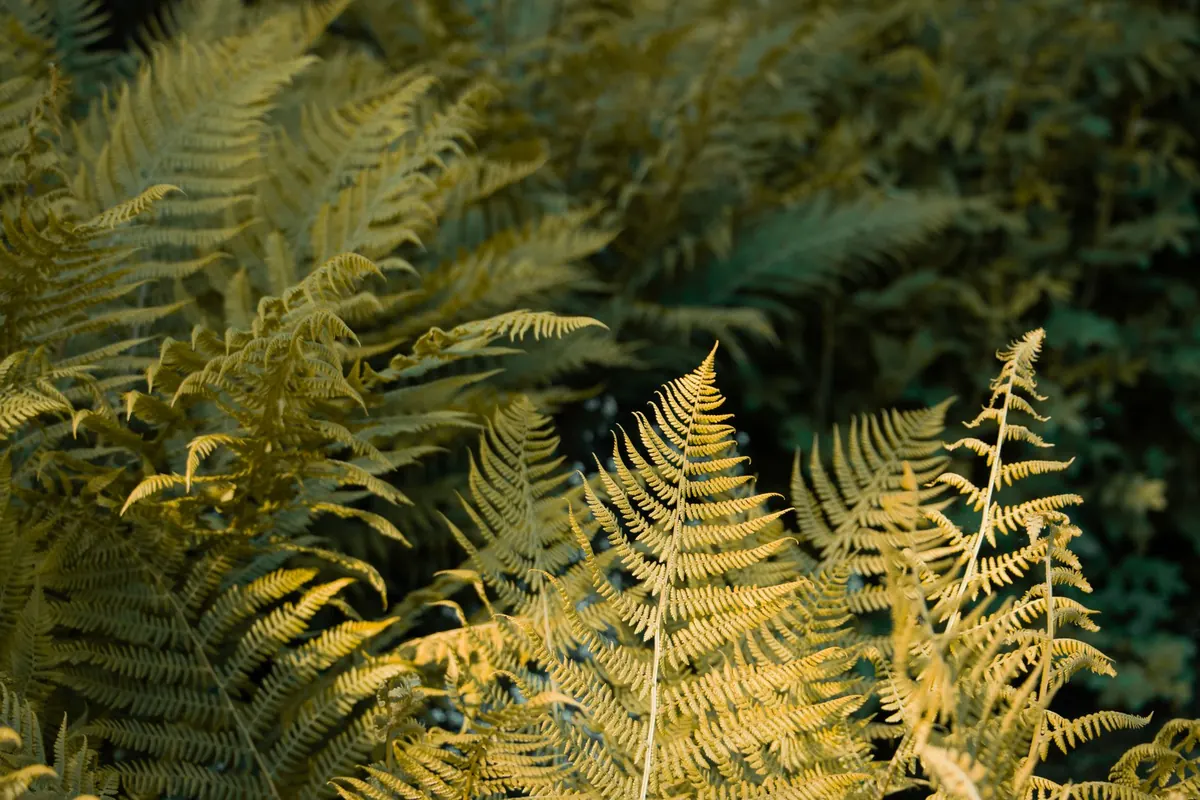
Photo: Thiha Myokyaw / Pexels

Compact ferns for pots and narrow, shady courtyards, chosen for spring, summer, autumn and winter interest, with...
Eight planting combinations that carry a damp, shady UK border through the year, pairing ferns with hellebores,...

A step-by-step guide to collecting, sowing and raising ferns from spores in the UK, from the first green film to...


Your guide to growing and identifying ferns.
