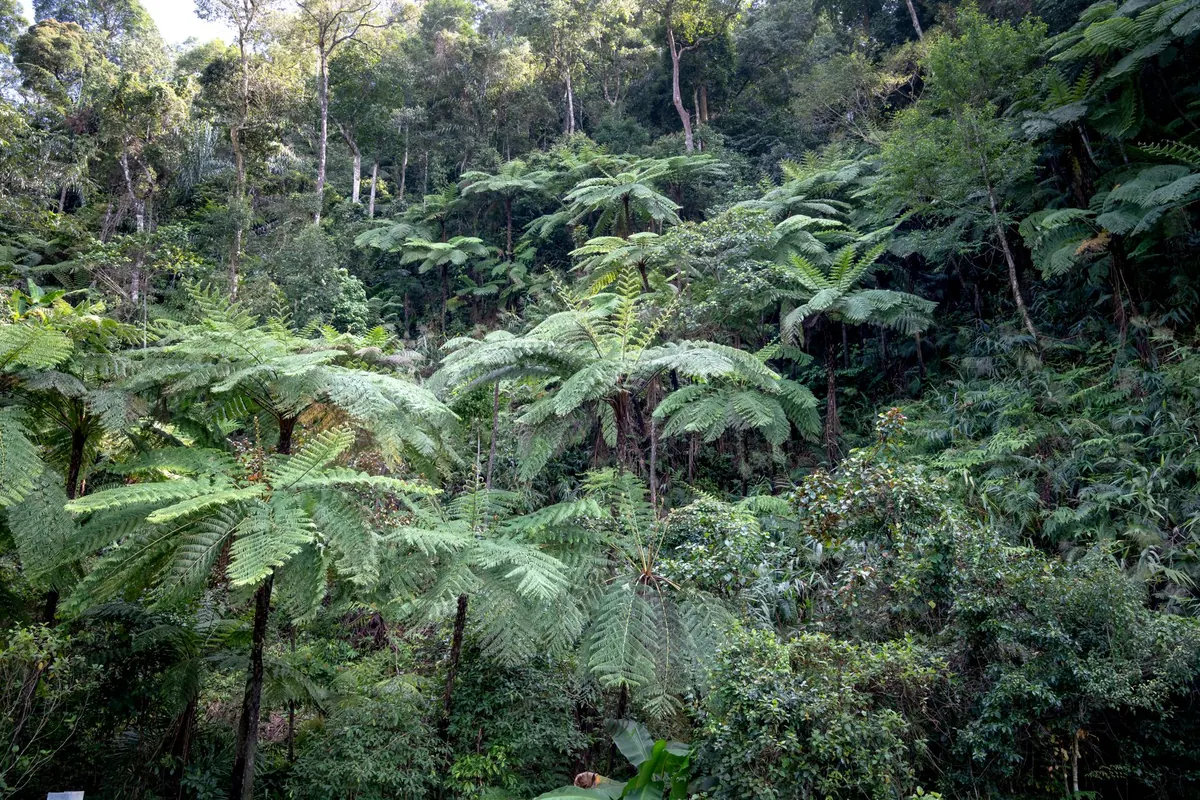
A tree fern changes the scale of a border. One good Dicksonia antarctica gives a small garden the atmosphere of a damp, green ravine, and it does it without the fuss you might expect from a plant with such exotic origins. This is not a tropical rarity that needs a heated greenhouse. Get three things right — the planting position, where you put the water, and a sensible winter routine — and it will settle into a British garden for decades.
It comes from the cool, wet forests of southeastern Australia, including Victoria, New South Wales and Tasmania, where summers are mild and rain is reliable. That is a fair description of much of Britain, particularly in the west. It is the hardiest tree fern generally sold here and the one most likely to come through a British winter intact.
The single most useful thing to understand is the trunk. It is not wood. It is a dense column of fibrous roots and the bases of old fronds, packed tightly together. Those roots absorb water and nutrients, which is why watering the trunk matters as much as watering the soil, and why a trunk that dries out completely in a hot August is a serious problem.
Growth is slow. In good conditions you might get a few centimetres of trunk a year; a metre of height represents decades. A large trunk is therefore genuinely old, and worth the money you pay for it — but a small one will establish more readily and cost a great deal less.
Most tree ferns are sold as cut trunks in spring, sometimes with no roots at all. That is normal. The base of the trunk will push out new roots once it is planted and kept damp. What you are checking for is rot.
Plants sold in pots with fronds already open are the easiest to establish, though they are slower to gain height. Plant in spring if you can, so the fern has a full season to root before its first winter in the ground.
Tree ferns want shelter. Wind shreds the fronds, and a plant in an exposed spot will look tatty by midsummer no matter how well you water it. A position with dappled shade, or morning sun and afternoon shade, suits them best. Some direct sun is fine as long as the trunk and roots stay damp.
The soil should be rich in organic matter, moisture-retentive but never waterlogged. Leaf mould, composted bark and garden compost dug in generously will do the job. These ferns lean towards acidic to neutral soil, so avoid heavy liming.
Plant so the base of the trunk sits just below the soil surface — a couple of centimetres is plenty. Burying much more of the trunk risks rot. Firm the soil around the base, water it thoroughly, and mulch around it with leaf mould or composted bark, keeping the mulch clear of the trunk itself.
They grow well in large containers too, which is useful if you garden on heavy clay or want to move the fern under cover for winter. The trade-off is more watering and a greater risk of the compost freezing solid.
Watering the soil at the base is not enough on its own. The roots in the trunk need direct moisture, so pour water slowly down the trunk and let it run down the fibre, ideally a couple of times a week through warm, dry spells.
A hose trickling at the top for a few minutes works well. So does a soaker hose coiled loosely around the trunk and turned on occasionally. If you only have a watering can, two or three canfuls poured slowly down the trunk will do more good than the same amount dumped on the soil.
In winter, ease off. The trunk should stay slightly damp but not saturated, because wet plus cold is what causes rot. In a wet western garden, rain usually does the work for you from October onwards.
A diluted liquid seaweed or balanced liquid feed, poured over the trunk and around the base, is enough. Once a fortnight in the growing season is generous; two or three feeds a year will keep a mature plant looking well. Overfeeding encourages soft growth that is more easily damaged.
Leave the fibrous coat on the trunk alone. It is not untidiness, it is insulation and a water reservoir. Remove fronds only when they have collapsed and turned brown, cutting them close to the trunk. Slugs occasionally nibble new croziers in spring, so keep an eye on young plants as they unfurl.
The trunk can take a fair amount of cold. The crown — the growing point at the top — is the vulnerable part, and keeping it dry and insulated is the aim.
Never wrap the trunk in plastic. It traps moisture and encourages rot. In mild coastal gardens, some growers leave the crown uncovered and get away with it for years — but one hard frost can undo all of that, so protection is cheap insurance.
Uncover in spring once new growth starts, usually April or May, but keep fleece to hand for a late frost. If the crown does get killed, do not dig the plant out in a hurry. A living trunk can produce fresh croziers from lower down, sometimes a full year later.
For the first season, focus on water and shade: keep the trunk damp, keep the base mulched, and do not feed heavily. Expect the fronds to look limp or scorched in a hot spell — that is usually a watering problem rather than a disease.
After that, the routine is short. Water the trunk in dry weather, feed lightly in summer, tidy dead fronds, and protect the crown from late autumn to mid spring. Do that and a Dicksonia antarctica will quietly add a few centimetres of trunk a year, and a great deal of character, for as long as you garden there.
Photo: Quang Nguyen Vinh / Pexels

Compact ferns for pots and narrow, shady courtyards, chosen for spring, summer, autumn and winter interest, with...

Eight planting combinations that carry a damp, shady UK border through the year, pairing ferns with hellebores,...

A step-by-step guide to collecting, sowing and raising ferns from spores in the UK, from the first green film to...


Your guide to growing and identifying ferns.
