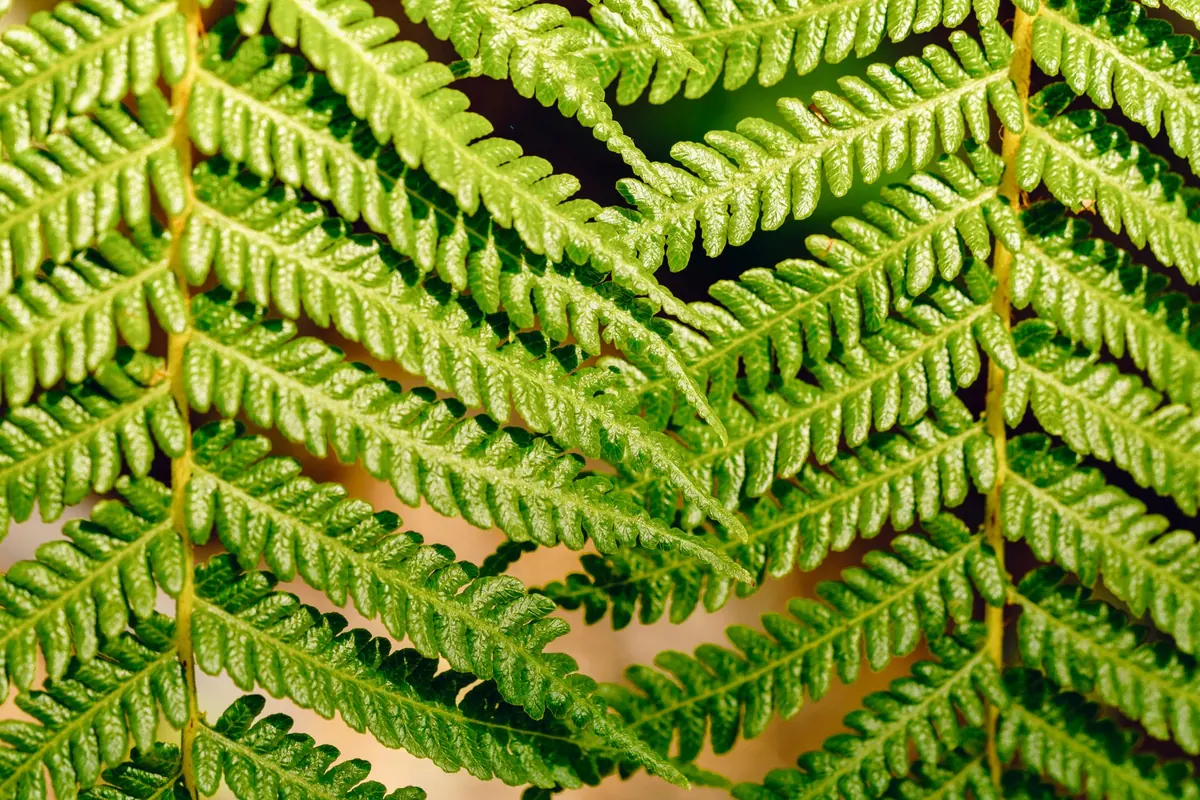
Most ferns are generous subjects. They grow in the same spot year after year, they hold still while you stare at them, and their spore patterns are plainly visible on the underside of the frond for much of the summer. What they do not do is announce themselves. Two ferns that look identical from a footpath can behave quite differently in a garden. Four observations will get you most of the way to a name: the outline of the whole frond, how many times it divides, the shape of an individual leaflet, and the pattern of sori underneath. Frond shape is the quickest route in, and the other three keep you honest.
Before you count anything, hold a frond flat against a pale surface, a notebook page or the palm of your hand. Silhouette alone rules out a good deal. Four outlines cover most of what you will meet in Britain.
Only the first is truly unmistakable. Related species often share an outline, so treat this step as a way of narrowing the field rather than a verdict.
A fern frond is feather-like by design. The central stem is the rachis; the leaflets branching off it are pinnae; if a pinna is itself divided, its segments are pinnules. Counting how many times that pattern repeats is the single most useful skill in fern identification.
Do your counting in the middle of the frond. Tips are often simplified and bases are often exaggerated, so both will mislead you.
Take one pinna from the middle of the frond and ask a single question: is this a leaflet, or a small branch carrying leaflets? Then take one pinnule from that pinna and ask it again. Saying the answer out loud — once divided, twice divided, three times divided — is more reliable than doing it silently.
Once you know the division count, the shape of an individual pinna begins to matter. Look at its edges, its tip and how it feels.
Male fern pinnae are lobed and toothed, with a slightly harsh, papery texture. The shield ferns, such as soft shield fern, carry small bristle-like spines at the tips of their pinnules, which gives the frond a prickly look and a soft feel. Broad buckler-fern pinnae break into rounded, blunt lobes. Polypody pinnae are blunt, leathery and smooth-edged, often faintly wavy, and the whole frond feels like stout card. Lady fern is finer and thinner than any of these, its pinnules sharply toothed and delicate enough to press between pages. Hart's-tongue has no pinnae at all.
The stalk below the lowest pinnae — the stipe — is where the quieter field marks hide. Colour and scales are decisive, and you do not need a lens for the obvious differences.
Male fern usually shows scattered pale brown scales and a green rachis. Scaly male fern is markedly more heavily dressed, with dense golden-brown scales, and often a small dark mark where each pinna joins the rachis. Broad buckler-fern has scales with a distinct dark central stripe, like two-tone paint. Lady fern carries pale green stalks with dark, almost black scales bunched at the base. Bracken stands on a stiff, near-black stipe, often with a groove down one side. Hart's-tongue has a distinctly hairy, scaly base.
Sori are clusters of spore cases, and they ripen through summer into early autumn, usually from July onwards. Many are covered by a thin flap called an indusium, and its shape is frequently the detail that settles an identification.
Timing matters. Late in the season sori darken, curl and lose their shape. If the underside is unhelpful, go back to frond outline and division and start again.
Bracken or broad buckler-fern? Both are triangular and divided three times or more. Bracken is coarse and stiff, carries one frond per stem on long creeping rhizomes, blackens at the stipe and holds its sori in a continuous line beneath a rolled frond edge. Broad buckler-fern is softer, has dark-centred scales and shows round, kidney-covered sori in neat rows.
Male fern or scaly male fern? Check the coat. Scaly male fern is denser and more golden, tends to hold green fronds through winter, and often shows that dark mark at the pinna base.
Polypody or hard fern? Both are once-pinnate ladders. Polypody has round, bare, orange-brown sori in two rows on leathery evergreen fronds that creep over rock and tree roots. Hard fern carries two quite different frond types on the same crown.
Never dig a fern up to identify it, and leave picking to those with permission — many sites are protected and a few of our ferns are genuinely scarce. Get three or four species firmly in your head, polypody, male fern, lady fern and bracken are good first choices, and everything else becomes a comparison rather than a puzzle.

Compact ferns for pots and narrow, shady courtyards, chosen for spring, summer, autumn and winter interest, with...
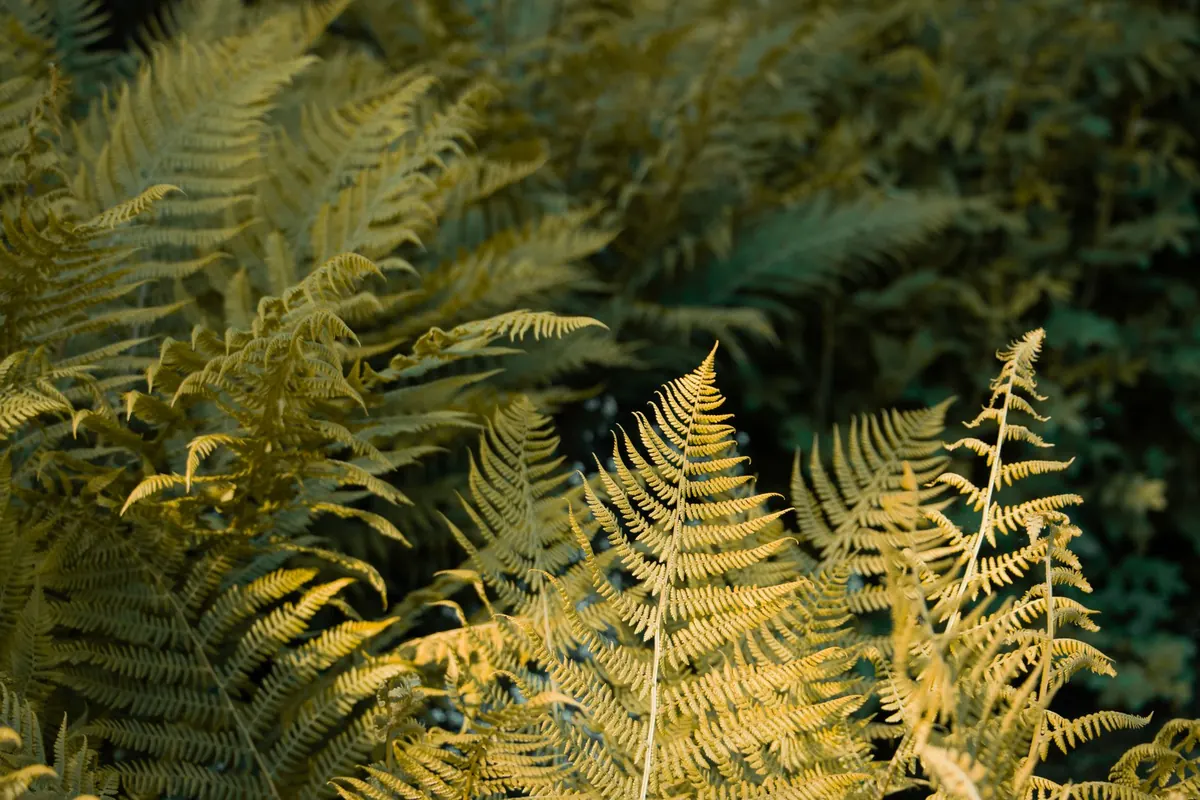
Eight planting combinations that carry a damp, shady UK border through the year, pairing ferns with hellebores,...
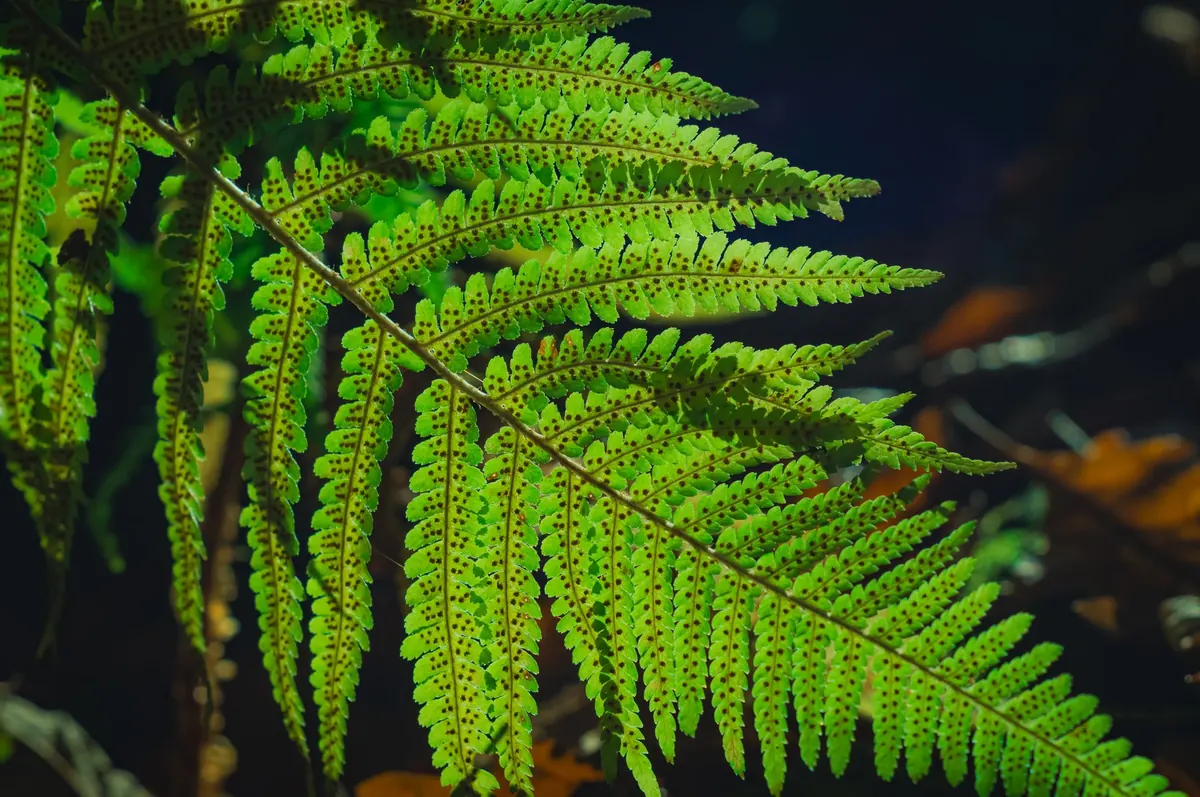
A step-by-step guide to collecting, sowing and raising ferns from spores in the UK, from the first green film to...
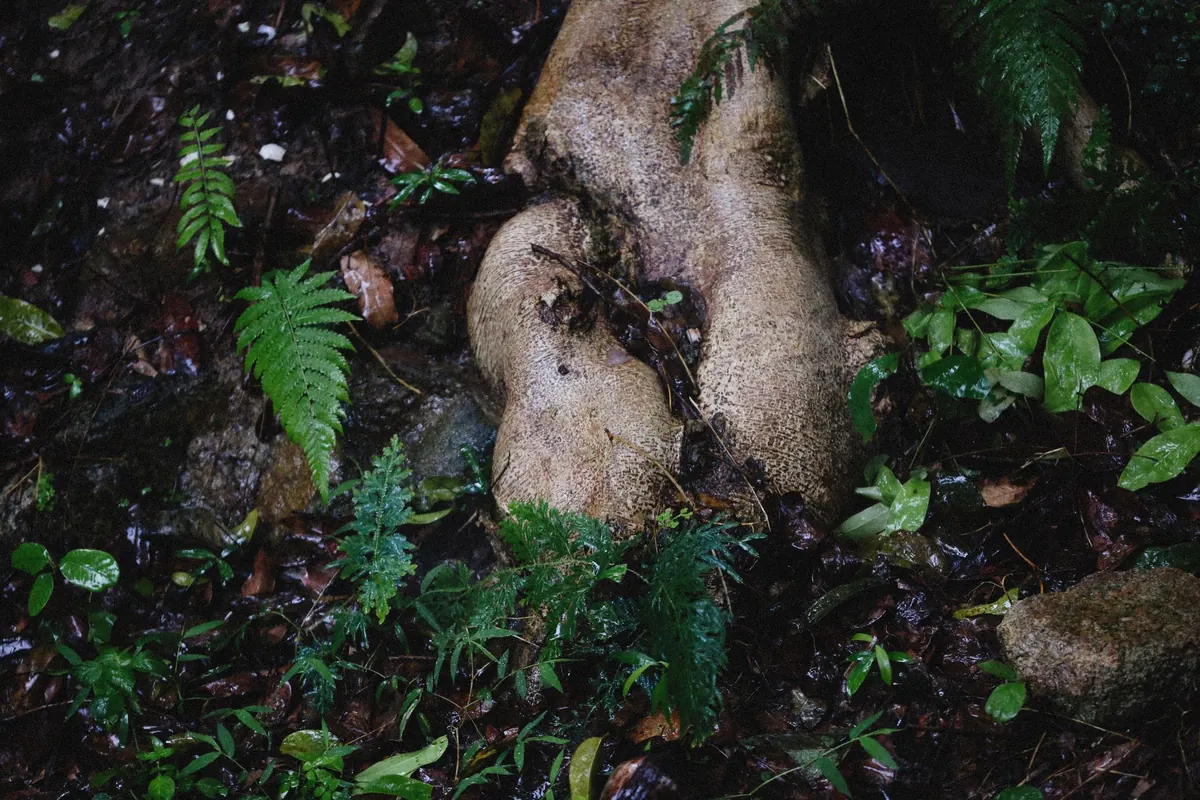

Your guide to growing and identifying ferns.
